 This concept is known as A decisive moment. This is can be further described as when the photographer gets a moment of genius muse. A momentary discovery of a vision.
2- Should you trust photography?
No, it can be a huge mistake, because photographers just don't turn around and snapshots to tell a story, they predict what might happen and sometimes can infiltrate their own ideas into the photographs.
3- what was revolutionary about the Leica in 1925?

The Leica was compact, quiet and fantastic for photographers because, it allowed one of the photographers eye to be free while he took his snapshots. as opposed to having both eyes blocked and only the camera lens would be your eyes. It was the chosen tool of Hungarian born photo-journalist Robert Cappa. He was famous for capturing the ultimate in decisive moments.
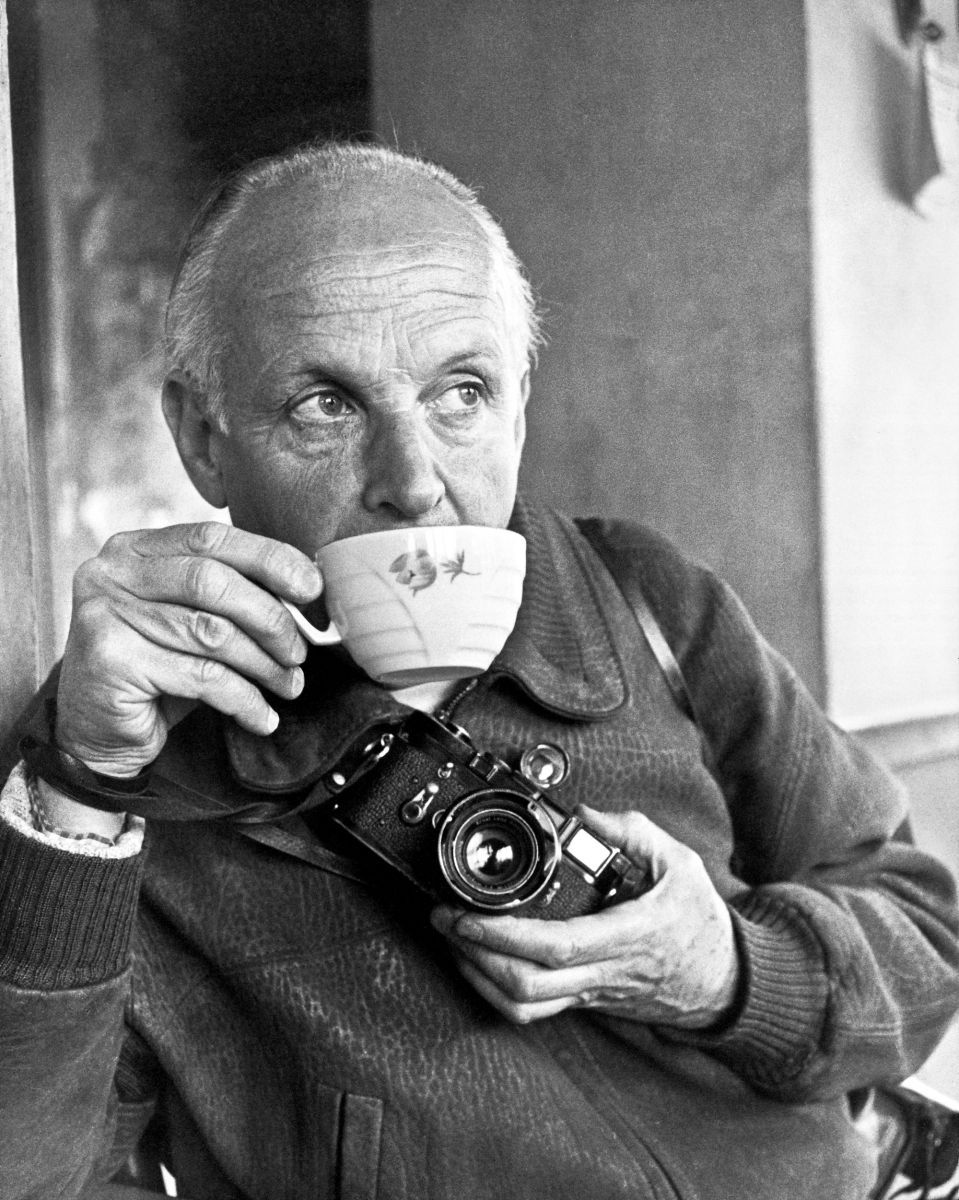 This Leica also gave Henri Cartier Bresson easy and quick accesses to historical decisive moments photographs.
4- what did George Bernard Shaw say about all the paintings of Christ?
The way photography projected life and could tell specifically on a past, could not be seen in a painting.
for this he said "i will exchange every painting of Christ, for one snapshot."
5- why were Tony Vaccaro's negatives destroyed by the army censors?

They contained images of dead G.Is and decisive moments the world wasn't ready to see.
6- Who was Henryk Ross what was his job?
He was a Jew who was incarcerated for 4 years in an infamous Nazi ghetto in Woodge, Poland.
He was the ghetto's official photographer and his job was to document productions of goods made by the inhabitants of woodge, then sold to make money for their captors.

Ross was a propaganda photographer at one level. He was employed by the department of administration and statistics and he produced identity card pictures.

He worked within the graphic departments, they were responsibilities for promoting the goods that were made in the ghetto. Although he had become a propaganda photographer for his jailers, he was a photo-journalist before the war. From his window at the building were the department of administration and statistics, he decided to document the worsening lives of the Jews.
7- Which show was a "sticking plaster for the wounds of war:, how many people saw it and what "cliche" photograph did it end on?
It was a photographic show called "The family of man," this exhibition opened in network in 1955 and by 1964, it had dragged in nine million visitors. But unfortunately this exhibition ended with an optimistic cliche by photographer W Eugene Smith who was selfish in his moral of photography.
 |
| optimistic cliche W Eugene Smith |
He did that because to photograph it in black and white, would be to keep it as a tragedy and according to Joel, tragedy are the makings of war and Ground Zero was a disaster.
 |
| GROUND ZERO |
 |
| Joel Meyerowitz |

No comments:
Post a Comment